

On many projects the protector comes last: the floor is laid, grouted, cleaned and only at the very end is it “treated”. It is precisely this sequence that causes most of the problems on stone floors and stairs. The right time to protect a surface is a different one, and it is worth writing it into the specification.
1. When is a treatment really effective?
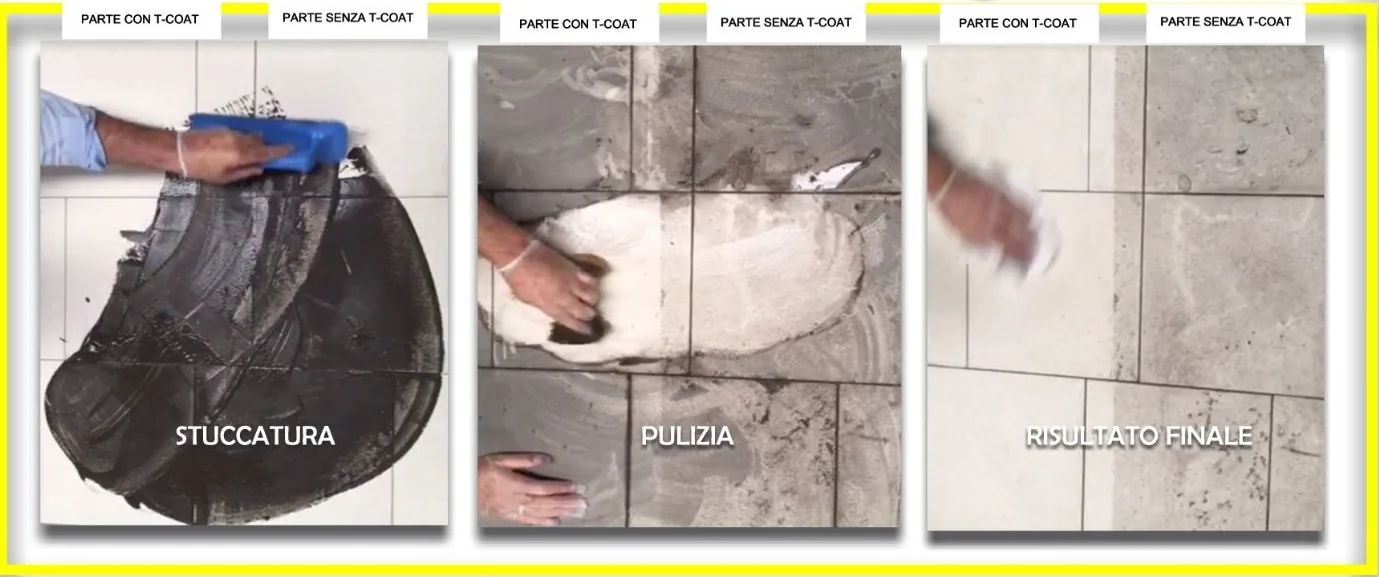
When it is applied before installation or immediately after, before grouting. This way, grout and site dirt meet an already protected surface and cannot penetrate the pores.
2. What happens if you only treat at the end of the job?
Anything can happen during the works: this is when surfaces most often get stained and damaged. If grouting is then carried out on unprotected material, cement residues penetrate the pores and acids are used to remove them. The result is an altered finish, haloes and, on marble, etching that requires restoration.
3. What really protects the surface?
A treatment applied at the right time that makes the surface not only stain-repellent but also easier to clean after grouting. A simple stain-repellent applied at the end of the works does not solve the problem of grout that has already been absorbed.
The solutions
 Before groutingPRESTUCCO – Pre-grouting protectorWater-based impregnator: makes grout cleaning easier, prevents haloes and protects against site dirt. Suitable for all surfaces.
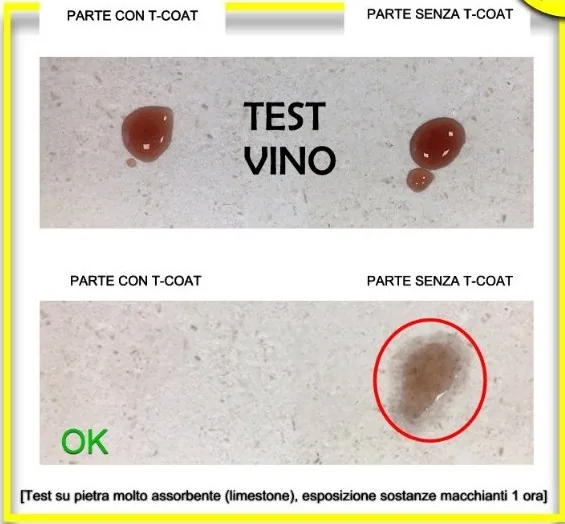
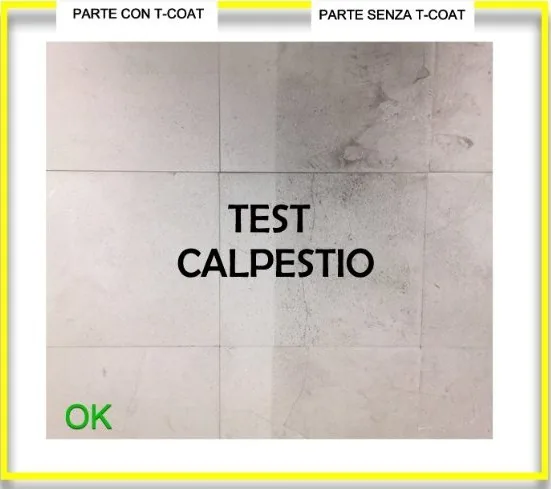
 Stain and dirt repellentT COAT – 2-in-1 protectorAgainst stains and surface dirt on matt, honed and brushed surfaces, sandstone and limestone, outdoors too.


What to write in the specification
· stain- and dirt-repellent protector specific to the finish, applied before handover and not after acid cleaning;
· end-of-job cleaning with detergents compatible with the material and the treatment.
Would you like ready-made specification clauses?
Tell us the material and finish of your project: we will send you the recommended treatment cycle and the technical data sheets of the products.
Ask for the cycle for your project

