

Every installer knows it: the longest and riskiest part of the job is not laying the floor, but cleaning up after grouting. On absorbent stone and rough finishes, grout gets into the pores, leaves a grey haze and forces you to go over it with acid products. With the right treatment applied beforehand, that haze comes off with water and a sponge.
Why grout “sticks”
Stones such as travertine, limestone, sandstone, terracotta and very rough porcelain stoneware have open porosity. Cement-based grout, while still fluid, enters these pores and, as it hardens, becomes part of the surface. At that point removing it without damaging the finish is difficult.
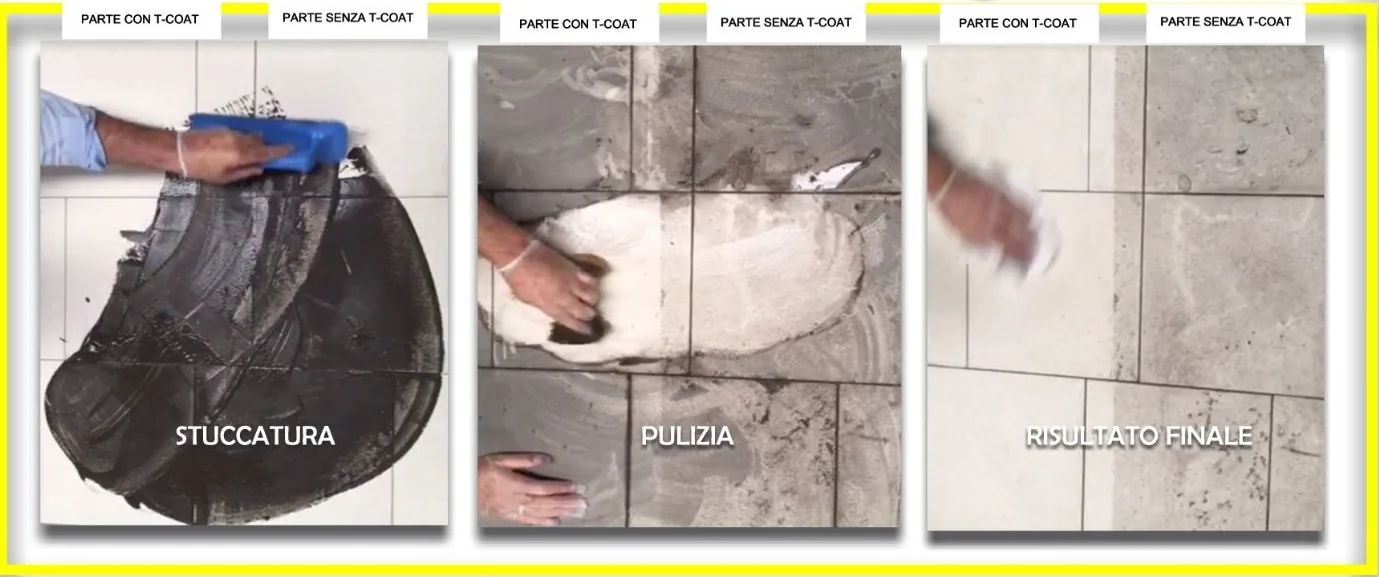
The three-step method
- 1. Installation and surface cleaningThe surface must be dry and free of dust and adhesive residues.
- 2. Treatment before groutingApply PRESTUCCO with a mop or microfibre cloth (on very rough surfaces with a low-pressure sprayer) and leave to dry.
- 3. Grouting and cleaningGrout as usual: residues are removed more easily and without haloes, with no need for acids.
The products
 Before groutingPRESTUCCOWater-based, solvent-free, ready-to-use impregnator. Compatible with subsequent water-based water-repellent protectors.
 Final protectionT COAT2-in-1 protector against stains and surface dirt for matt, honed and brushed surfaces, sandstone and limestone.
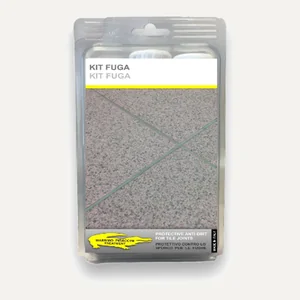 To leave with the clientKIT FUGAProtects grout joints from dirt and blackening and keeps them clean for longer.

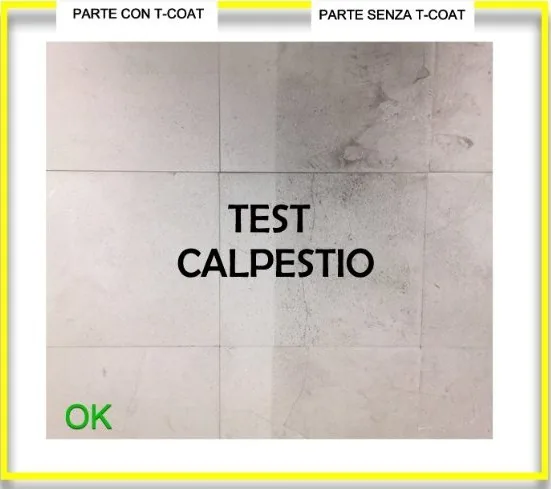
An advantage for the installer: handing over a clean, protected floor reduces complaints and call-backs. Offering the treatment as an item in your quote is also an added service for the client.
Want to try it on site?
We organise training for tilers and applicators, by video conference, at your premises or at our training centre.
Request free training

